
Want to say best wishes in different languages without sounding awkward? This guide gives you simple, copy-ready phrases you can use in cards, texts, captions, and everyday messages. Whether you are writing to a friend, coworker, classmate, or family member, a short wish in someone’s language can feel thoughtful and personal.
You will find common ways to say best wishes, all the best, good luck, and congratulations in multiple languages, plus tips on when to use each one. The goal is to keep things easy, natural, and helpful.
Quick Answer
“Best wishes in different languages” usually means simple phrases like “all the best,” “good luck,” or “congratulations” translated for cards, texts, and kind messages.
TL;DR
- Use short phrases people actually recognize
- Match the phrase to the occasion
- Keep formal messages simple and polite
- Birthday, good luck, and congratulations work best
- Add English meaning for clarity
- Choose natural wording over literal translation
Why people search for best wishes in different languages
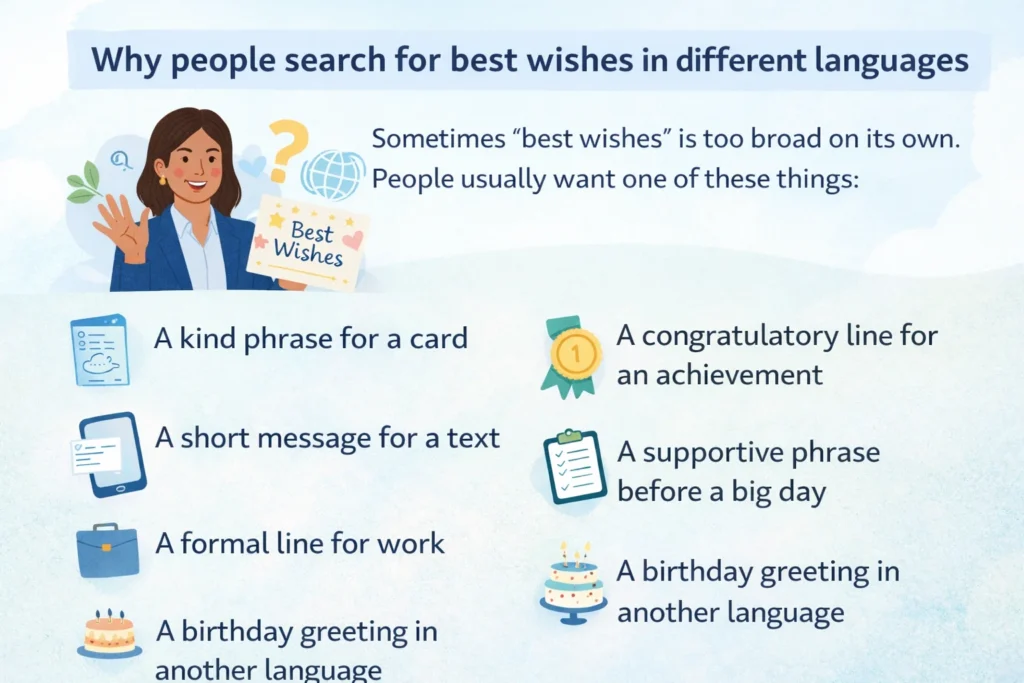
Sometimes “best wishes” is too broad on its own. People usually want one of these things:
- A kind phrase for a card
- A short message for a text
- A formal line for work
- A birthday greeting in another language
- A congratulatory line for an achievement
- A supportive phrase before a big day
That is why this article covers both general best wishes and the most useful related phrases.
Best wishes in different languages
Here are popular, simple versions of “best wishes” or “all the best” across different languages. These are great for general encouragement, warm messages, and polite sign-offs.
Short best wishes list
- Spanish: Mis mejores deseos
- French: Meilleurs vœux
- German: Die besten Wünsche
- Italian: I migliori auguri
- Portuguese: Meus melhores desejos
- Dutch: De beste wensen
- Swedish: Bästa önskningar
- Norwegian: Beste ønsker
- Danish: Bedste ønsker
- Polish: Najlepsze życzenia
- Turkish: En iyi dileklerimle
- Greek: Οι καλύτερες ευχές
- Romanian: Cele mai bune urări
- Czech: Nejlepší přání
- Hungarian: Legjobb kívánságaim
- Finnish: Parhaat toivotukset
- Croatian: Najbolje želje
- Serbian: Najlepše želje
- Slovak: Najlepšie priania
- Slovenian: Najlepše želje
- Russian: Наилучшие пожелания
- Ukrainian: Найкращі побажання
- Arabic: أطيب التمنيات
- Hebrew: מיטב האיחולים
- Hindi: शुभकामनाएँ
- Urdu: نیک تمنائیں
- Bengali: শুভেচ্ছা
- Punjabi: ਸ਼ੁਭ ਕਾਮਨਾਵਾਂ
- Gujarati: શુભેચ્છાઓ
- Marathi: शुभेच्छा
- Tamil: வாழ்த்துகள்
- Telugu: శుభాకాంక్షలు
- Kannada: ಶುಭಾಶಯಗಳು
- Malayalam: ആശംസകൾ
- Japanese: शुभ?No — better use: ご多幸をお祈りします for formal wishes, or simply お祝い申し上げます depending on context
- Korean: 최고의 축복을 보냅니다
- Chinese (Simplified): 最美好的祝愿
- Thai: ขอให้โชคดีและมีความสุข
- Vietnamese: Những lời chúc tốt đẹp nhất
- Indonesian: Harapan terbaik
- Malay: Ucapan terbaik
- Filipino: Pinakamabuting pagbati
All the best in different languages
“All the best” is often more natural than “best wishes” in daily conversation. It works well in texts, casual notes, and supportive messages.
Copy-ready options
- Spanish: Todo lo mejor
- French: Tout le meilleur
- German: Alles Gute
- Italian: Ti auguro il meglio
- Portuguese: Tudo de bom
- Dutch: Het allerbeste
- Polish: Wszystkiego najlepszego
- Turkish: Her şeyin en iyisi senin olsun
- Hindi: तुम्हें ढेरों शुभकामनाएँ
- Urdu: آپ کے لیے نیک تمنائیں
- Arabic: كل التوفيق وأطيب التمنيات
- Russian: Всего наилучшего
- Chinese: 一切顺利
- Japanese: うまくいきますように
- Korean: 모든 일이 잘되길 바라요
When to use “all the best”
Use it when you want your message to feel:
- Warm
- Natural
- Supportive
- Not too formal
- Good for work or personal messages
Good luck in different languages
A lot of people searching for best wishes really mean good luck. This phrase works best before an interview, exam, presentation, trip, match, or big life moment.
Good luck examples
- Spanish: Buena suerte
- French: Bonne chance
- German: Viel Glück
- Italian: Buona fortuna
- Portuguese: Boa sorte
- Dutch: Veel succes
- Swedish: Lycka till
- Norwegian: Lykke til
- Danish: Held og lykke
- Polish: Powodzenia
- Turkish: Bol şans
- Greek: Καλή τύχη
- Russian: Удачи
- Ukrainian: Удачі
- Arabic: حظًا موفقًا
- Hebrew: בהצלחה
- Hindi: शुभकामनाएँ / गुड लक
- Urdu: نیک تمنائیں / گڈ لک
- Bengali: শুভকামনা
- Tamil: நல்ல அதிர்ஷ்டம்
- Telugu: శుభాకాంక్షలు
- Japanese: 頑張って
- Korean: 행운을 빌어요
- Chinese: 祝你好运
- Thai: โชคดี
- Vietnamese: Chúc may mắn
- Indonesian: Semoga beruntung
- Filipino: Good luck / Suwertehin ka sana
Original short good luck messages
- You have prepared well. Go shine.
- Stay calm and trust yourself.
- Wishing you confidence for the day ahead.
- You are ready for this moment.
- Keep going. You have got this.
- May today feel smooth and steady.
- Sending positive energy your way.
- Walk in with confidence and clarity.
- Believe in your effort.
- Let your preparation speak for you.
- One step at a time.
- I am rooting for you today.
Congratulations in different languages
For wins, milestones, promotions, graduations, and achievements, congratulations is the better fit.
Congratulations list
- Spanish: Felicidades
- French: Félicitations
- German: Herzlichen Glückwunsch
- Italian: Congratulazioni
- Portuguese: Parabéns
- Dutch: Gefeliciteerd
- Swedish: Grattis
- Norwegian: Gratulerer
- Danish: Tillykke
- Polish: Gratulacje
- Turkish: Tebrikler
- Greek: Συγχαρητήρια
- Russian: Поздравляю
- Ukrainian: Вітаю
- Arabic: تهانينا
- Hebrew: מזל טוב
- Hindi: बधाई हो
- Urdu: مبارک ہو
- Bengali: অভিনন্দন
- Tamil: வாழ்த்துகள்
- Japanese: おめでとうございます
- Korean: 축하합니다
- Chinese: 恭喜
- Thai: ขอแสดงความยินดี
- Vietnamese: Chúc mừng
- Indonesian: Selamat
- Filipino: Binabati kita
Original congratulations messages
- You earned this moment. Congratulations.
- So happy to see your hard work pay off.
- What a wonderful achievement.
- Celebrating your success with you today.
- This is such a proud milestone.
- You did it, and you did it well.
- Your dedication truly shows.
- Congratulations on a well-deserved win.
- A big cheer for your achievement.
- This success looks great on you.
- Proud of everything you have accomplished.
- Wishing you even more success ahead.
Happy birthday in different languages
Birthday searches often overlap with “best wishes” because people want sweet, international greetings for cards and social posts.
Happy birthday examples
- Spanish: Feliz cumpleaños
- French: Joyeux anniversaire
- German: Alles Gute zum Geburtstag
- Italian: Buon compleanno
- Portuguese: Feliz aniversário
- Dutch: Fijne verjaardag
- Swedish: Grattis på födelsedagen
- Norwegian: Gratulerer med dagen
- Danish: Tillykke med fødselsdagen
- Polish: Wszystkiego najlepszego z okazji urodzin
- Turkish: Doğum günün kutlu olsun
- Greek: Χρόνια πολλά
- Russian: С днём рождения
- Ukrainian: З днем народження
- Arabic: عيد ميلاد سعيد
- Hebrew: יום הולדת שמח
- Hindi: जन्मदिन मुबारक
- Urdu: سالگرہ مبارک
- Bengali: শুভ জন্মদিন
- Punjabi: ਜਨਮਦਿਨ ਮੁਬਾਰਕ
- Tamil: இனிய பிறந்தநாள் வாழ்த்துகள்
- Telugu: పుట్టినరోజు శుభాకాంక్షలు
- Japanese: お誕生日おめでとう
- Korean: 생일 축하합니다
- Chinese: 生日快乐
- Thai: สุขสันต์วันเกิด
- Vietnamese: Chúc mừng sinh nhật
- Indonesian: Selamat ulang tahun
- Filipino: Maligayang kaarawan
Original birthday wishes
- Wishing you a joyful year ahead.
- Hope your day feels bright and special.
- Sending warm birthday smiles your way.
- May this year bring kind moments and growth.
- Cheers to a wonderful year ahead.
- Hope today is full of love and laughter.
- Celebrating you and all you bring to others.
- Wishing you peace, joy, and good memories.
- May your birthday feel as lovely as you are.
- Here is to a fresh and happy chapter.
- Hope your day is sweet from start to finish.
- Sending cheerful birthday wishes your way.
Formal best wishes in different languages
If you are writing to a coworker, client, teacher, or professional contact, simple and polite wording is safest.
Formal message ideas
- Wishing you continued success.
- Best wishes for your next chapter.
- Sending my sincere congratulations.
- Warm wishes for a successful future.
- I wish you every success ahead.
- Please accept my warmest wishes.
- With kind regards and best wishes.
- Wishing you all the best in your new role.
- May your upcoming journey go smoothly.
- Sending respectful and warm wishes.
- Best regards and every good wish.
- Wishing you success in all you do.
Best situations for formal wording
Use formal wishes for:
- Work emails
- Farewell notes
- Promotion messages
- Graduation cards
- Thank-you notes
- Professional social posts
How to choose the right phrase
A translated phrase should match the moment. Here is a simple shortcut:
- Use best wishes for warm, general kindness
- Use all the best for friendly support
- Use good luck before something important
- Use congratulations after success
- Use happy birthday for birthdays only
If you are unsure, choose the shorter and more common version. That usually sounds more natural.
Tips for using translated wishes naturally
1. Keep it short
Short greetings are easier to use correctly and less likely to sound stiff.
2. Match the tone
A work email needs cleaner wording than a casual birthday text.
3. Add the English meaning if needed
This helps avoid confusion, especially in mixed-language groups.
4. Avoid overloading one message
One translated line is thoughtful. Too many can feel forced.
5. Choose familiar phrases
Common phrases are usually better than literal word-for-word translations.
FAQ
What is the best way to say best wishes in different languages?
The best way is to use short, common phrases people already recognize, such as “all the best,” “good luck,” or “congratulations.”
Is “all the best” better than “best wishes”?
In many everyday situations, yes. “All the best” often sounds more natural and conversational.
Can I use translated wishes in a card?
Yes. Short translated wishes work well in cards, captions, and text messages.
What are the most searched translated wishes?
Birthday wishes, good luck messages, congratulations, and general best wishes are usually the strongest categories.
Should I use formal or casual wishes?
Use formal wording for work and respectful relationships. Use casual wording for friends and family.
Final thoughts
Using best wishes in different languages is a simple way to make your message feel more personal. You do not need long, complicated lines. A short, well-chosen phrase is often the most thoughtful option.
If your goal is to build a strong wishes page, the best format is simple: start with a quick answer, group phrases by occasion, and add original message ideas people can copy right away. That creates a more useful page than a plain translation list.
Looking for the next page to publish?
Try these related topics next:
- Good luck in different languages
- Congratulations in different languages
- Happy birthday in different languages
- Formal best wishes for work
- Short international greeting captions

Jordan is a Los Angeles–based writer who loves bringing party energy and everyday joy into each wish. At Wishexx, they focus on birthdays, greetings and fun congratulations messages that are easy to drop into chats, captions and cards.