
Some words sound more complicated than they really are, and contingent meaning is a perfect example. If you’ve searched for what does contingent mean, you’re likely trying to understand how the word works in everyday language, business, law, or real estate. In simple terms, “contingent” describes something that depends on certain conditions or events before it can happen. This guide explains the meaning clearly and shows how to use contingent in a sentence naturally.
Quick Answer
Contingent meaning usually comes down to this: something is not final because it depends on a condition. The word can also mean a group of people who represent a larger group.
TL;DR
• Usually means “dependent on something else”
• Often appears with on or upon
• It is mainly an adjective
• It can also be a noun
• It is common in formal English
• It is not true slang
What Does Contingent Mean?
What does contingent mean? The word “contingent” means dependent on something else. When an action, agreement, result, or decision is contingent, it will only happen if a specific condition is met. For example, a job offer may be contingent on passing a background check, or a house sale may be contingent on the buyer securing financing. In each case, the final outcome is not guaranteed yet because it depends on another event. A simple example of contingent in a sentence is: “The trip is contingent on good weather.”
What Does “Contingent” Mean?

In plain English, contingent means dependent on a condition. Something contingent may happen, but only if something else happens first.
For example, “Our trip is contingent on the weather” means the trip is not certain yet. The weather will decide it.
The word can also carry the idea of uncertainty. It is possible, but not guaranteed.
Part of Speech: Is It a Noun or an Adjective?
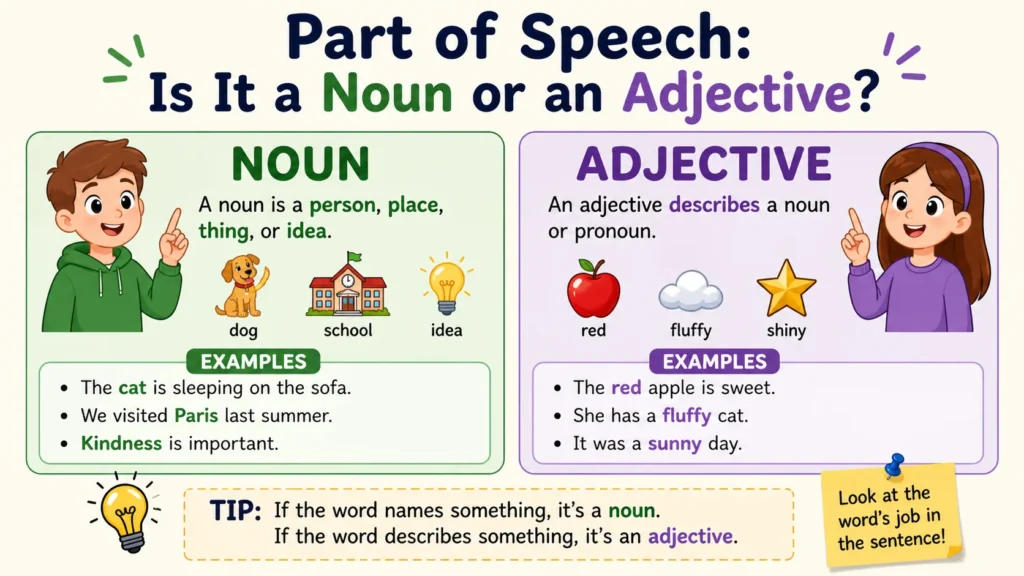
Contingent is most often used as an adjective. In that role, it describes something that depends on another event or condition.
Example: “The job offer is contingent on a background check.”
It can also be a noun. As a noun, it means a group of people who are part of a larger group.
Example: “A large contingent of parents attended the school meeting.”
So yes, both are correct:
• Adjective: “The approval is contingent on funding.”
• Noun: “A contingent of reporters waited outside.”
It is not commonly used as a verb. It is not a punctuation term either.
How “Contingent” Works in Everyday English
The most common pattern is:
contingent on + noun
contingent upon + noun
Both forms are correct. Contingent on is a little more common in everyday writing. Contingent upon sounds slightly more formal.
Here are simple patterns:
• “The picnic is contingent on the weather.”
• “Payment is contingent upon delivery.”
• “The sale is contingent on financing.”
A good way to test the word is to replace it with dependent on. If the sentence still makes sense, contingent probably fits.
Common Contexts Where You’ll See “Contingent”

1. Work and business
At work, the word often appears in emails, contracts, and hiring language.
Example: “The bonus is contingent on team performance.”
You may also hear contingent worker. That usually means a temporary or contract-based worker rather than a permanent employee.
2. Real estate
In real estate, contingent often means a seller has accepted an offer, but the sale still depends on a condition.
That condition may involve financing, inspection, or another required step.
3. Law and contracts
In legal writing, the word often means a right or duty depends on an uncertain future event.
That is why lawyers use phrases like contingent fee or contingent interest.
4. News and formal writing
In news or formal writing, the noun sense often appears.
Example: “The mayor arrived with a small contingent of advisors.”
Examples of “Contingent” in Sentences
These examples show the word in natural modern English:
• “Our weekend plans are contingent on whether my sister can drive.”
• “The scholarship is contingent on staying in good academic standing.”
• “Their offer was contingent upon a home inspection.”
• “A contingent of fans traveled to the away game.”
• “The company hired contingent workers for the busy season.”
• “Any refund is contingent on proof of purchase.”
• “His promotion is contingent on finishing the training program.”
• “A small contingent from Texas attended the conference.”
A useful tip: when contingent is an adjective, it often introduces a condition. When it is a noun, it usually names a group.
Is “Contingent” Formal, Informal, or Slang?
Contingent is mostly a formal or neutral standard English word. You will hear it in professional, academic, legal, and news contexts more than in casual talk.
It is not true slang. In texts or online posts, some people use it, but they are still using the regular English word.
In casual speech, many people would choose simpler words like:
• depends
• conditional
• not final yet
So if you want the simplest style, you might say, “It depends.” If you want a more formal tone, contingent works well.
Synonyms, Antonyms, and Related Words
No single synonym fits every case, so context matters.
Close synonyms for the adjective sense
• dependent — the clearest everyday match
• conditional — very close, especially in rules or agreements
• uncertain — useful when the focus is lack of certainty
• possible — works in some cases, but weaker
Close synonyms for the noun sense
• group
• delegation
• detachment
Antonyms
Exact antonyms depend on context, but these often work:
• unconditional
• certain
• fixed
• guaranteed
In legal contexts, you may also see the opposite idea expressed as vested.
Related word: contingency
Do not confuse contingent with contingency.
• contingent = dependent on a condition
• contingency = a possible future event or problem to plan for
Example:
“Approval is contingent on funding.”
“We made a contingency plan in case funding fails.”
Common Mistakes and How to Avoid Them
Mistake 1: Treating it as always meaning “temporary”
That is only true in some business phrases, like contingent worker. The core meaning is broader.
Better: think condition-based, not always temporary.
Mistake 2: Confusing it with “contingency”
These words are related, but they are not the same.
Correction:
Wrong idea: “The trip is a contingency on the weather.”
Better: “The trip is contingent on the weather.”
Mistake 3: Using it where a simple word is better
In casual conversation, depends may sound more natural.
Example:
Formal: “Attendance is contingent on approval.”
Casual: “Attendance depends on approval.”
Mistake 4: Forgetting the condition
The adjective sense usually needs a condition.
Weak: “The plan is contingent.”
Better: “The plan is contingent on board approval.”
Mini Comparison Table: Contingent vs. Similar Choices
| Context | Best Choice | Why |
|---|---|---|
| A formal contract | contingent | Precise and condition-based |
| Everyday conversation | depends on | Simpler and more natural |
| Rules or requirements | conditional | Very close in meaning |
| A group at an event | contingent | Correct noun sense |
Mini Quiz
1. What does contingent usually mean?
A. Broken
B. Dependent on a condition
C. Very expensive
2. Which sentence uses contingent as a noun?
A. “The deal is contingent on financing.”
B. “A contingent of students joined the march.”
C. “Her grade is contingent upon attendance.”
3. Which phrase is correct?
A. contingent for the weather
B. contingent on the weather
C. contingent at the weather
4. Is contingent usually slang?
A. Yes
B. No
Answer key:
- B
- B
- B
- No
FAQ
What does contingent mean in simple words?
It usually means something depends on something else first. It is not certain yet.
Does contingent mean guaranteed?
No. It usually suggests the opposite. It means there is a condition that still must be met.
Is contingent the same as conditional?
They are very close. In many sentences, you can swap them, but contingent often sounds more formal.
What does contingent on mean?
It means “depending on.” For example, “The trip is contingent on the weather” means the weather will decide whether the trip happens.
Can contingent be used as a noun?
Yes. As a noun, it means a group of people who are part of a larger group, such as “a contingent of delegates.”
What does contingent mean in real estate?
It usually means an offer has been accepted, but the sale still depends on one or more conditions, such as inspection or financing.
Is contingent a formal word?
Yes, usually. It is common in formal and professional English, though regular readers still see it often.
Conclusion
Understanding the contingent meaning can help you use the word with confidence in everyday conversations, professional writing, legal documents, and real estate discussions. In short, contingent means something is conditional or dependent on another factor. Now that you know the meaning and usage, try adding it naturally to your own sentences when describing something that depends on a condition.